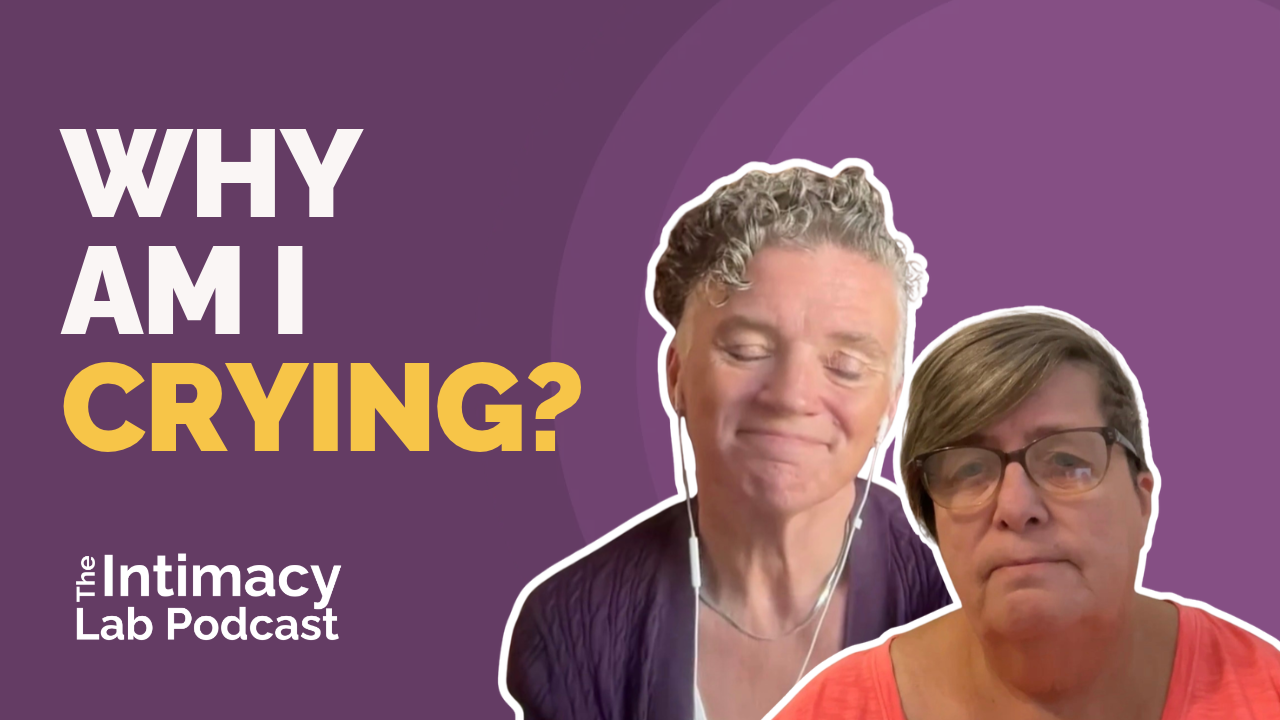
Inner child work is the practice of noticing how the younger versions of you still show up in your adult life, and learning to care for them instead of being run by them. In this episode of the Intimacy Lab, I sit down with my dear friend, colleague, and somatic practitioner Judy to talk about what that looks like in real life: the tears, the fear, the language, and the slow, honest work of becoming the grown-up your younger selves needed.
Heads up: this episode includes personal discussion of sexual coercion, childhood fear, and trauma. It's tender, honest, and not graphic.
Watch on Spotify | Listen on Apple Podcasts
What is inner child work?
Inner child work means looking at how your past is affecting you today. As kids, the deepest parts of our brains decided how the world works: who is safe, what love costs, whether it's okay to need things. Those early rules keep running in the background until we notice them.
Most healing approaches do some version of the same thing. They pull those old files forward and ask, gently, "Is that still true?" That process is often called memory reconsolidation, and it's what makes old patterns finally loosen their grip.
Inner child, younger selves, or parts? Why the words matter
Some people hear "inner child" and want to run the other way. That's exactly why Judy and I started this conversation. The work is the same, but the words can make it feel welcoming or cringey. Here are the most common ones:
Inner child: the classic term for the younger you who still lives inside
Younger selves or young parts: a softer option that allows for more than one younger you (Judy's favorite)
Parts: from Internal Family Systems (IFS), which names protectors, managers, and firefighters
Adaptive child and wise adult: from Terry Real's Relational Life Therapy, which splits it into the part that learned to survive and the grown-up who can lead now
A specific age: "my 8-year-old" or "my teenager," which is how Judy and I often talk about it
It doesn't matter what you call it. What matters is stepping back and asking how your past is shaping your present.
Why I let myself cry now
We opened with a card from the We're Not Really Strangers Self Love deck: "What have you grown to love about yourself?" My answer was my tears.
As a kid, I made fun of my mom for crying at movies. For years I needed a sad film to even let myself cry. Then my divorce opened the floodgates, and tears showed up everywhere, including work meetings, where I apologized every single time. Today I've cried on big stages, and I cry with clients. I've learned that when I cry with someone, it often gives them permission to cry too. Judy calls it empathy: your heart aching with someone, not just for them.
You can't convince someone to do inner child work
A colleague once asked me how to convince clients to work on their inner child. My answer: you don't.
Our brains tend to bring up only what we're ready for. That's why slowing down matters so much, and why letting people share at their own pace is one of the most trauma-informed things we can do. Judy's therapist has a beautiful phrase for this: "invite me to consider." An invitation, not an expectation. You can say yes, or not yet.
Just because it's familiar doesn't make it true
This was one of Judy's big lines. Some feelings are so familiar that we assume they're facts. They did happen, and they were true back then. That doesn't mean they're true today.
Judy describes it as an intersection where younger Judy and adult Judy meet. When something feels familiar, she pauses and gets curious instead of treating the old feeling as a verdict for today.
Reparenting is a relay race back to yourself
In my work, I often start by offering the reassurance a younger part never got: yes, you're safe; no, I won't hurt you. That's an important first step. But eventually it becomes a relay race, where I pass the baton back. The goal is for you to build a relationship with your younger selves, so that when you say "I've got you," they believe it.
How childhood fear shows up in adult relationships
I shared a story about my husband being gone for twelve hours without a word, and my brain jumping straight to "Is he dead on the side of the road?" My rational brain knew that was ridiculous. My nervous system had other ideas.
I grew up in the house of a cop, hearing scary stories no small kid should hear, and nobody ever asked if I needed help processing them. That's the nervous system that still shows up today. Healing doesn't mean never being affected again. It means recognizing the old fear when it arrives and knowing how to soothe it.
One more thing I'm still sitting with: even harm that happens to us as adults lands on our young parts too. We're carrying a whole bus of younger selves with us, all the time.
If you see something, say something
Judy closed with a promise she makes to her younger selves, borrowed from airport announcements: if I see something, I'll say something. For many of us, asking for help felt dangerous as kids. So part of the work is doing the opposite of what kept us safe back then: telling a trusted friend, reaching out to a therapist, or simply saying, "Can you just give me a hug?"
Tell us what words fit you
What language feels right to you: inner child, younger selves, parts, or something else? And what have you grown to love about yourself? It takes about two minutes, and everything's optional.
Frequently asked questions about inner child work
-
Inner child work is the practice of noticing how the younger versions of you still shape your feelings, reactions, and relationships today, and learning to care for those younger parts as the adult you are now.
-
They're close cousins. Internal Family Systems (IFS) calls them "parts," Relational Life Therapy calls them the "adaptive child," and many people say "younger selves." The names differ, but they all ask the same question: how is my past affecting me today?
-
No. Your brain tends to bring up what you're ready for. Some people start with a feeling, a reaction that seems bigger than the moment, or simply things they loved to do as a kid.
-
Reparenting is the practice of giving your younger selves the safety, care, and reassurance they didn't get, so that over time you can trust yourself to say "I've got you."
-
Tears sometimes carry feelings from long ago, even before we had words. You don't always need to know why. Letting yourself feel it, with curiosity instead of judgment, is often enough.
-
Yes, alongside or after therapy. A Holistic Intimacy Coach like Michelle Renee supports people through connection, touch-based practice, and slowing down, and may require a talk therapist when a collaboration seems needed.
Resources mentioned or recommended
What Happened to You? by Bruce D. Perry and Oprah Winfrey
Complex PTSD: From Surviving to Thriving by Pete Walker
Quieting the Storm Within by J. Ashley T. Booth (an illustrated introduction to IFS)
Us: Getting Past You & Me to Build a More Loving Relationship by Terrence Real
We're Not Really Strangers, Self-Love edition
The Book of Cuddles by Yoni Alkan DHS
If this conversation stirred something up, you deserve support. Consider reaching out to a therapist or someone you trust. In the US, you can call or text 988 anytime.
Work with me
If you'd like support getting to know your younger selves, I work with clients one on one, in person, hybrid, or fully virtual. Book a free connection call and let's see what fits.
About Michelle Renee and Judy
Michelle Renee is a Holistic Intimacy Coach with a background in cuddle therapy and surrogate partner work. Through her private practice, Human Connection Lab, she helps people rebuild trust, practice vulnerability, and feel at home in their bodies. She is also the COO and co-owner of Cuddlist, which trains and certifies practitioners in The Therapeutic Approach to Touch. Find her on Instagram at @meetmichellerenee.
Judy is an integrative and somatic practitioner who supports individuals through Reiki and other body-based work. With a background in social work, she is also a college professor teaching marketing and economics, a consultant, and a trained Cuddlist. To connect with Judy, email michelle@humanconnectionlab.com.